How fluid-applied restoration systems work.
A fluid-applied reinforced system builds a continuous membrane over an existing roof that is in suitable condition. Here is how it works, where it fits and where it does not.
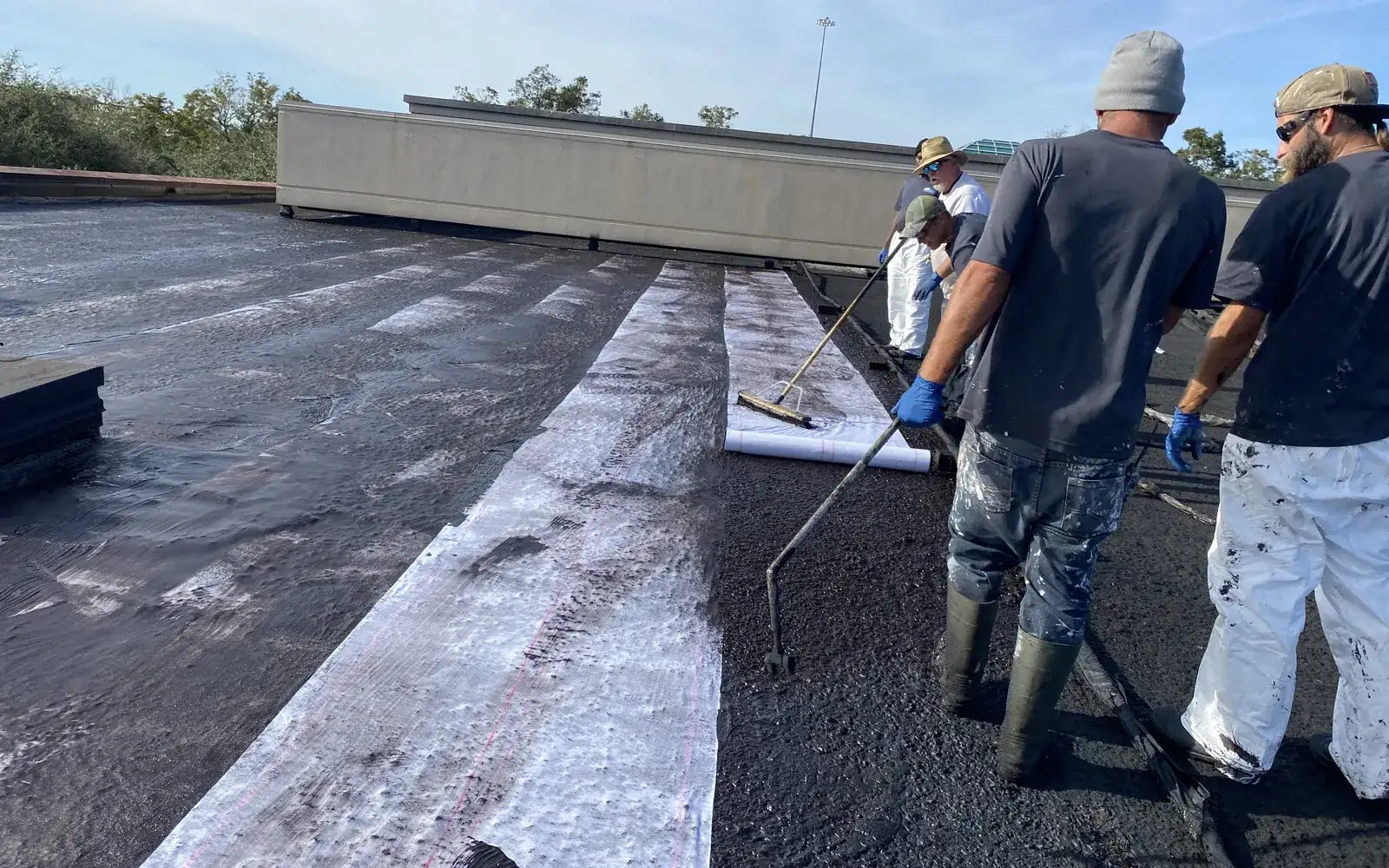
How the system is built
- Base coats. Applied over a cleaned, repaired existing roof.
- Embedded reinforcement. Polyester fabric adds strength across the field and at details.
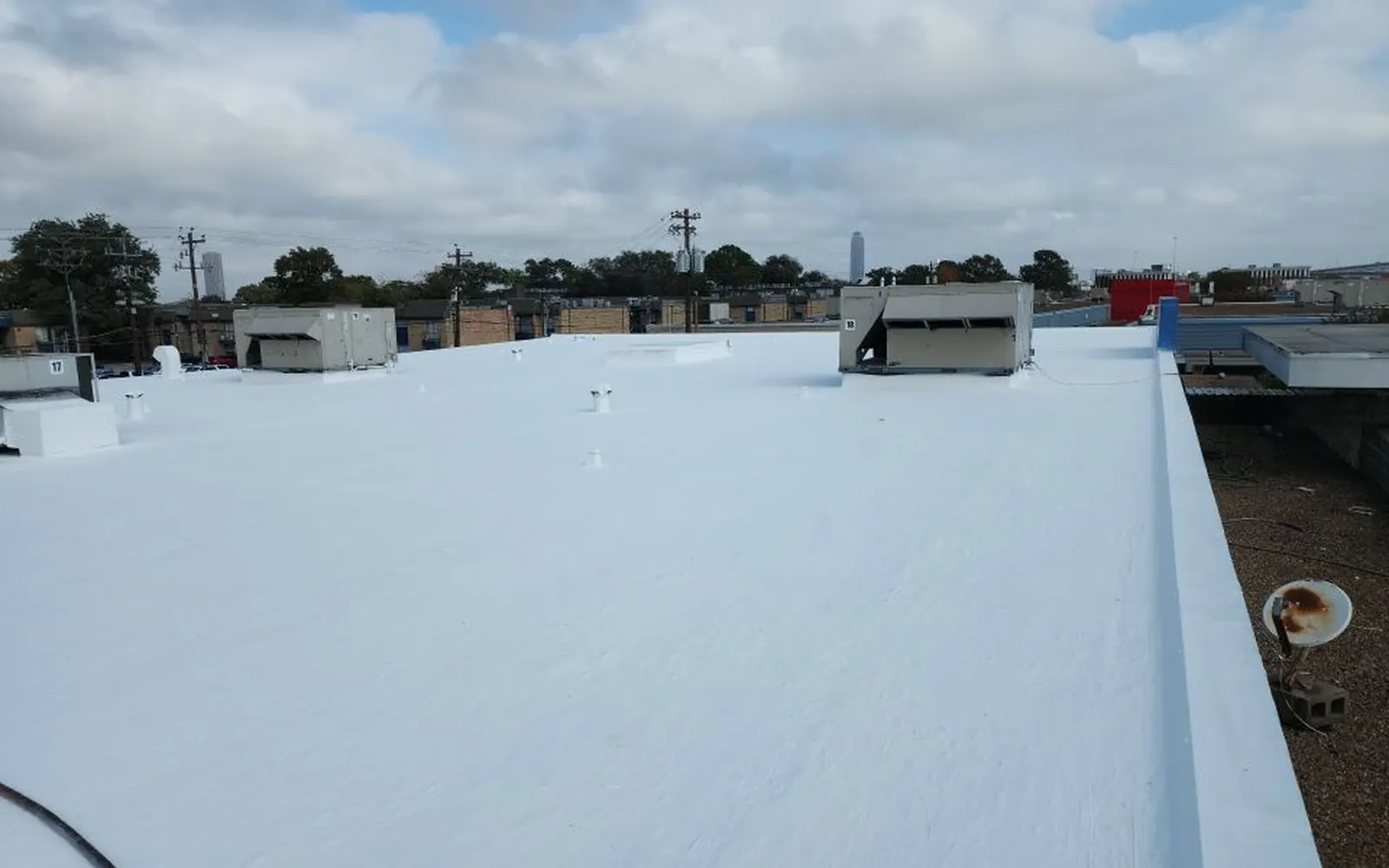
- Reflective top coats. A light-colored finish that reflects sunlight.
Where it can fit
Continuous membrane
The finished membrane has no lapped seams in the field.
Complex details
Conforms to parapets and dense rooftop penetrations.
Existing substrates
Can be used over several common low-slope roof types when they are in suitable condition.
Less disruption
Usually quieter and cleaner than a tear-off while the building stays open.
About penetrations
The fluid-applied membrane itself is adhered rather than mechanically fastened. That does not mean a project never involves penetrations: repairs, drainage work or moisture-drying vents can require them, depending on the roof.
Honest pros and cons
Approved pros and cons for each system are being prepared with the Structure team. In the meantime, read when restoration is the wrong call.
Some restoration systems can be renewed at the end of their warranty term, subject to the specific system and roof condition. Warranty terms are confirmed per project.
Not sure what your roof needs?
Tell us what is going on. A member of our team will follow up during business hours and explain what the roof needs before you commit to major work.