Mechanically Fastened vs. Fully Adhered Roof Systems
A plain-language comparison of the two main ways a single-ply roof membrane is held down: how each works, where each one loses, and how to tell which one suits your building, budget and wind exposure.
The choice between mechanically fastened vs. fully adhered comes down to how the roof membrane is held in place. A mechanically fastened roof is screwed down with plates along the seams, which usually makes it faster to install, less expensive and free of adhesive odor. A fully adhered roof is glued across its whole surface, which typically gives better wind uplift ratings, fewer seams and a smoother finish, but costs more labor and depends on the weather during installation.
Neither is the better roof in every case. Which one fits depends on your wind exposure, your budget, whether the building is occupied during the work, and what’s underneath. Here’s how they compare.
What do mechanically fastened and fully adhered mean?
Both terms describe how a single-ply membrane such as TPO, PVC or EPDM is attached over the insulation. If a term here is unfamiliar, the roofing glossary has plain definitions.
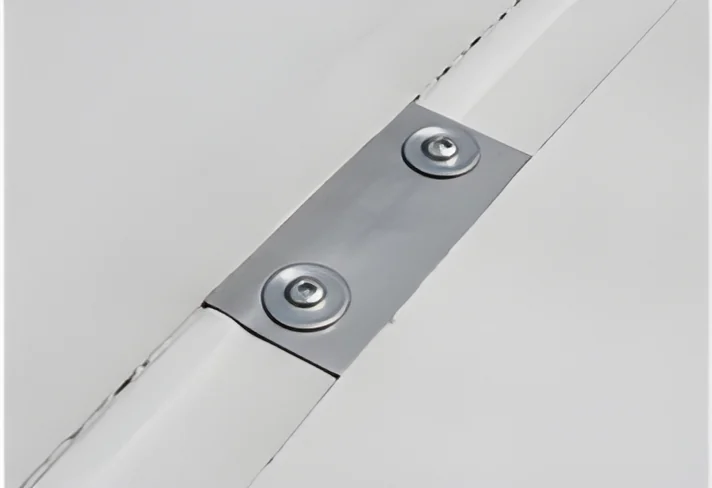
Mechanically fastened: screws and metal plates (or long metal bars called battens) hold the membrane to the deck, usually in rows along the seams. The next sheet overlaps the fasteners and the seam is heat-welded over them, so the plates end up sealed inside the seam.
Fully adhered: adhesive bonds the membrane to the layer beneath it, usually insulation or a cover board (a thin, tough board laid over the insulation). The insulation itself is usually screwed to the deck, and sometimes glued.
Most thermoplastic roofs (TPO and PVC) have historically been installed mechanically fastened. Adhered TPO and PVC roofs are becoming more common.
How mechanically fastened vs. fully adhered roofs compare
Wind
This is the biggest difference. On a fully adhered roof, the adhesive spreads wind uplift evenly across the whole sheet, and adhered systems typically earn higher wind uplift ratings and code approvals. On a mechanically fastened roof, the sheet is held only at the fastener rows, so the membrane between the rows can flutter and billow in wind, and it can be noisy below the deck on very windy days.
That doesn’t make a fastened roof weak. Fastened systems are designed around tested fastening patterns for specific wind loads, so the question to ask is whether the full assembly is rated for the wind your building has to meet.
Seams
On a fastened roof, the sheet width is set by the fastener spacing, and narrower sheets are typically used at the perimeter and corners. That means more seams. An adhered roof can use the widest sheets available, which means fewer seams to weld and maintain.
On a mechanically fastened roof, plates and screws like these hold the sheet at the seams. The next sheet is welded over them.
Hail and exposed fasteners
An adhered roof has no screws or plates sitting right under the membrane. One manufacturer says hail damage on fastened roofs often happens where hailstones hit the screws and plates underneath, and that adhering the cover board and membrane reduces that risk.
Installation speed and cost
Mechanically fastened roofs are generally faster to install with less labor, and they’re often chosen as the more cost-effective option. Adhered roofs are labor-intensive: the crew has to put adhesive on both the substrate and the back of the membrane at the right rate and recognize when it’s tacky enough to bond. That shows up as a higher upfront cost.
Weather during installation
Fastened systems have few installation temperature restrictions. Adhesives do: temperature and humidity affect how they go on, the limits vary by product, and water-based adhesives also have storage and transport limits. Newer adhesives have widened the window, but an adhered roof still depends more on the weather.
Odor and occupied buildings
Solvent-based adhesives have a noticeable odor, and fumes can be a real problem when people are working in the building below. Water-based and low-VOC adhesives reduce the smell. A mechanically fastened roof avoids adhesive almost entirely, which is why it’s often the choice when the building has to stay occupied.
Appearance, repairs and warranties
Adhered roofs look tighter and smoother because the sheet is bonded down. One contractor source notes that fastened membranes are relatively easy to take up and repair because the fasteners can be removed. One manufacturer says adhered systems often qualify for longer warranties, subject to eligibility.
A third option, induction welding, sits between the two. Plates are screwed down under the membrane and then bonded to its underside with induction heat, so the membrane itself isn’t pierced and the wind load is spread more evenly, often with fewer fasteners.
Which one should you choose?
Choose mechanically fastened if your budget or schedule is tight, the building will stay occupied during the work, and the assembly can meet the wind rating your building needs. Where it loses: sheet flutter and noise in high wind, more seams, exposed plates under the membrane, and typically lower wind uplift ratings.
Choose fully adhered if your building has high wind exposure, you want the fewest seams and the smoothest finish, or you’re aiming for a longer manufacturer warranty. Where it loses: higher upfront cost, slower installation, more dependence on the weather, and adhesive odor unless a low-odor product is used.
The honest version: the attachment method is only part of the answer
Most of what’s written about this comparison comes from manufacturers that sell adhesives, fasteners or both, so read the claims with that in mind. This article draws on them too, so treat its comparison claims the same way.
A mechanically fastened roof that meets the required wind rating and is installed to the tested pattern is a sound roof. Paying for full adhesion on a building that doesn’t need the extra wind performance may buy you a nicer-looking roof and not much else. And an adhered roof only earns its advantages if the adhesive goes on at the right rate, in the right conditions, by a crew that knows when it’s ready to bond.
How the insulation is attached matters too. Adhered systems often need more fasteners per insulation board than fastened systems, so ‘fully adhered’ doesn’t mean ‘no screws’. Ask how every layer is held down, not just the top one.
Finally, the attachment method doesn’t change the maintenance your roof needs. Either way, it still needs regular inspections.
What we do
Start with the wind requirement. We’d confirm what wind uplift rating your building has to meet, because that often narrows the choice before cost comes into it.
Look at the deck and what’s on it. The deck type and the existing roof affect how the insulation and membrane can be attached.
Ask how you use the building. If people will be working underneath during the job, that weighs toward a fastened system or a low-odor adhesive.
Price both, or tell you to wait. We’d lay the options side by side in our roof system analysis, and if your current roof has good years left, that’s what we’d tell you.
Questions to ask any contractor quoting a single-ply roof
Is the membrane mechanically fastened, fully adhered or induction welded?
What wind uplift rating does the full assembly meet, and does it match what my building requires?
How are the insulation and cover board attached?
If it’s adhered, which adhesive, and what are its temperature and odor limits?
Does the attachment method change the warranty you can offer?
Not sure which attachment method your roof needs?
We will check your wind requirement, look at what is underneath, and tell you plainly what fits.